Could Your Neck Be Causing Your Headaches?
Almost everyone has experienced a headache at some point in their life, but when those headaches keep coming back, life can get so much harder. This is especially true when typical headache treatments don’t seem to help.
Headaches can be tricky because there are so many different types and potential triggers. In fact, sometimes the source of the headache isn’t even in the head, but in the neck.
That’s what happened with a recent Rising Sun Physical Therapy patient, a lawyer we’ll call Melissa. By looking beyond her symptoms and focusing on the full picture, we were able to help her finally find headache relief.
Melissa’s Story: She Thought the Headaches Would Never End
For nearly two years, Melissa would find herself with a headache by the end of the day.
Some days, it felt like pressure behind her eyes. Other days, it spread from the base of her skull into her temples. She tried over-the-counter medications and drinking more water. Massages provided short-term relief but didn’t address the underlying cause, and the headaches returned.
Eventually, she visited her doctor, but since her scans looked normal, there wasn’t much he could do.
Melissa worried these headaches were simply something she had to live with. But at a friend’s suggestion, she decided to try Rising Sun Physical Therapy.
Looking Beyond the Headache
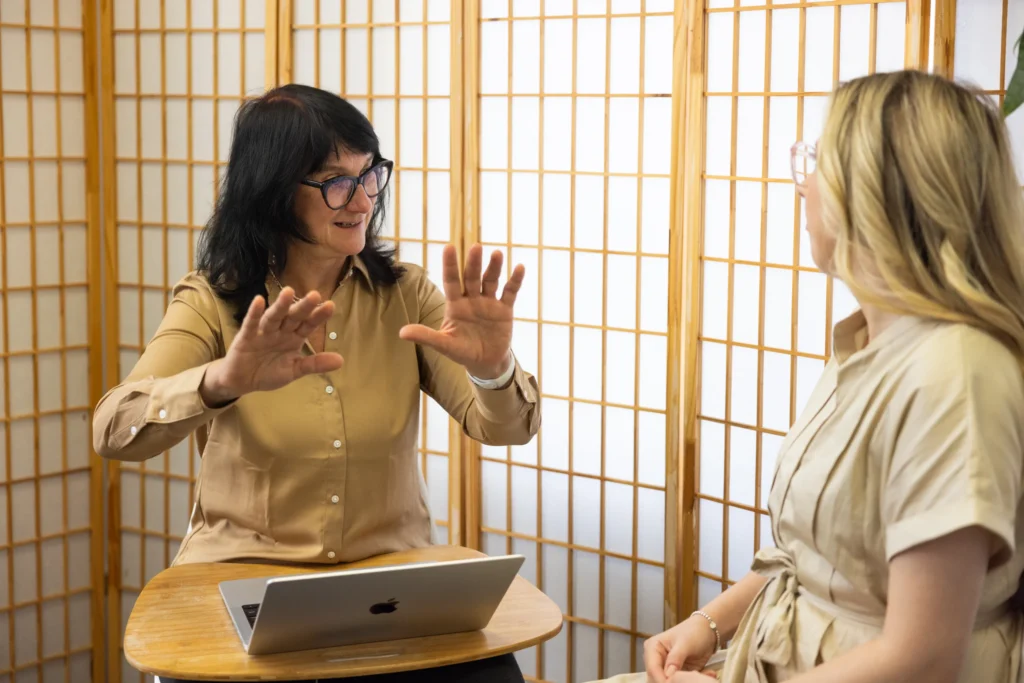
As always, Melissa’s first appointment consisted of an in-depth evaluation in which we listened to her full story. We started by asking for more details about her headaches, including the specifics of her symptoms. She shared that her headaches were often accompanied by stiffness in her neck and shoulders–our first sign that a whole-body approach might be best for her.
We also noted that her headaches tended to develop later in the day, particularly after long hours at her computer. Often, she would first notice them on her drive home, and they would start at the base of her skull and slowly creep upward.
By this point, we were fairly certain her neck was involved, and a physical examination revealed the following:
- Limited mobility in her upper neck
- Muscle tension in the neck and jaw
- Weakness in the deep neck stabilizers
- Poor breathing mechanics
- Increased tension caused by chronic stress
All of these issues were sending pain signals to her brain. However, because the neck shares pain-processing pathways with the head, her brain interpreted these signals as originating from her head rather than her neck.
There was one other key piece, however: work-related stress, which can increase muscle tension and amplify pain signals within the nervous system. This is why Melissa’s headaches tended to develop after particularly long days in the office.
Exercise of the Month
Neck Glide
(Neck)
Stand tall with your shoulders relaxed and your head in a neutral position. Gently draw your head straight backward, keeping your chin level—like you’re trying to make a double chin. Avoid tilting your head up or down. Hold briefly, then return to the starting position.
3 Sets, 10 Reps
A Whole-Person Approach to Treatment
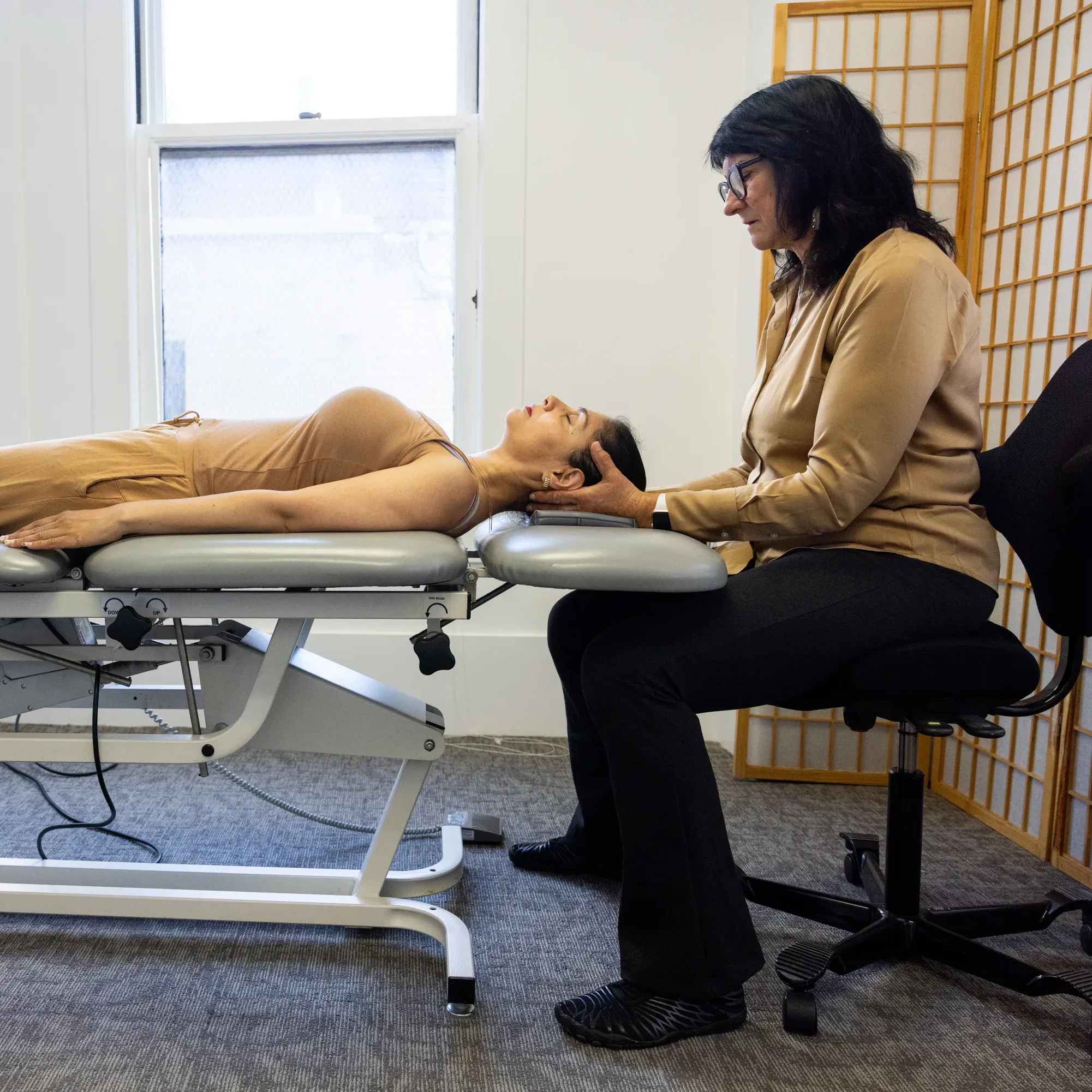
Melissa’s previous attempts at managing her headaches focused on chasing symptoms. At Rising Sun Physical Therapy, we focused on restoring balance throughout her body. This included:
- Targeted neck exercises to strengthen the deep neck flexor muscles, which help support the head and reduce strain on surrounding tissues.
- Postural retraining to reduce strain on the neck and upper shoulder muscles that can contribute to headache pain
- Ergonomic optimization for her workstation to improve positioning during long hours at the computer
- A plan for regular movement breaks to decrease stress on the cervical spine
- Gentle mobility exercises to restore movement in stiff joints and reduce tension throughout the neck and upper back
- Mindful movement strategies to help Melissa recognize and reduce patterns of muscle guarding and unnecessary tension
- Guidance on pacing activities without flare-ups so she could stay active without overloading sensitive tissues or worsening symptoms
As Melissica’s neck function improved, her headaches began changing, too. First, they become less intense. Then they became less frequent. Soon, Melissa found herself enjoying her evenings without any headache pain.
There May Be More to Your Headaches Than You Realize
As Melissa learned, persistent headaches are often influenced by multiple factors. Even seemingly unrelated issues like breathing patterns, sleep quality, or movement habits can all play a role.
Addressing only one piece of the puzzle can leave you stuck in the same cycle. The comprehensive, whole-person approach at Rising Sun Physical Therapy can help you move better, feel safer in your body, and regain confidence in daily life.
Our team is here to listen, examine the full picture, and create a personalized plan that supports lasting relief. Contact us today to learn more about how we can help you.
Take Control of Your Nagging Neck Pain
At Rising Sun Physical Therapy, we believe the best injury is the one that never happens. Whether you’re recovering from a previous setback or looking to stay ahead of pain, our whole-body approach is designed to help you build a stronger, more resilient you. Don’t wait for pain to be your wake-up call.
The Power of Breath
Stop reading right now and take a deep breath.
How did it make you feel? If you noticed a sense of calm or felt your muscles relax a bit, it’s not in your head. Breath affects far more than our oxygen intake, which is why the team at Rising Sun Physical Therapy frequently incorporates breathwork into our recovery strategies.
Why Breathing Matters
Stress and pain can affect our breathing patterns, turning them shallow and fast. As a result, you might start breathing relying on accessory breathing muscles (neck and shoulders) rather than your diaphragm, the primary breathing muscle located beneath the lungs.
Over time, this can affect your overall health and well-being in a variety of ways, including:
- Increased neck and shoulder tension
- Jaw tightness
- Reduced core stability
- Fatigue
- Greater sensitivity to pain
These issues can worsen existing complaints, including headaches, pelvic floor dysfunction, chronic pain, and much more. But improving your breathing patterns can enhance the rest of your treatment plan.
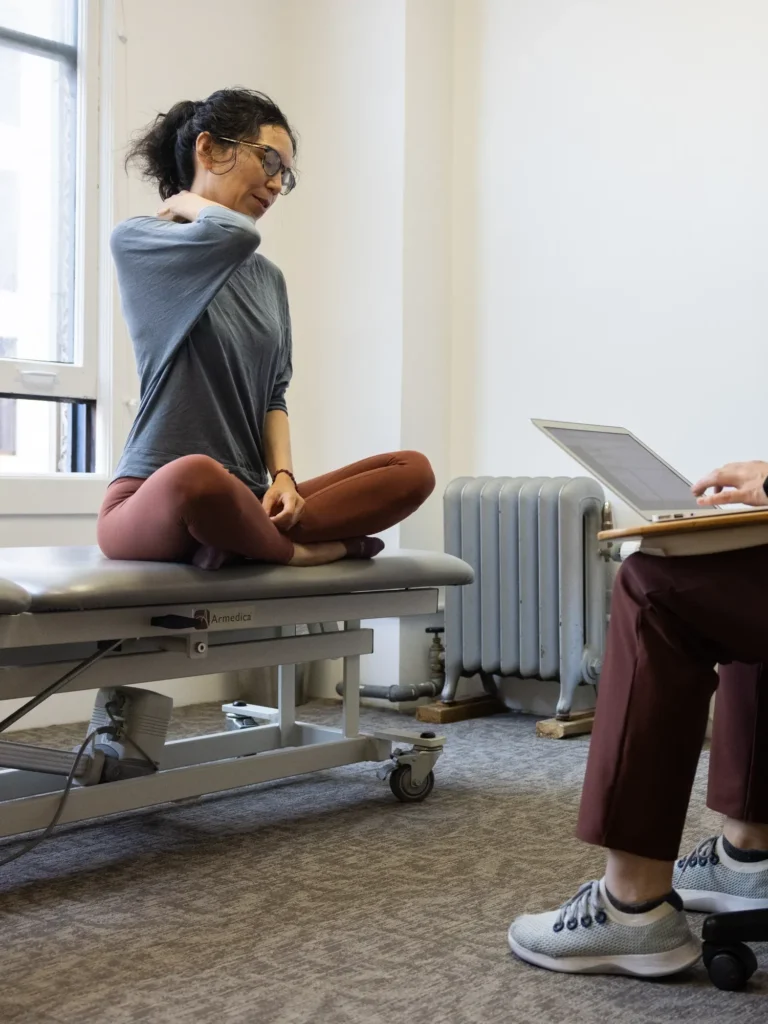
How Breathwork Supports Recovery
We work closely with our patients to determine which breathwork techniques will be most beneficial for them. For example:
- Diaphragmatic breathing can help reduce neck and chest tension.
- Rib mobility exercises can improve movement through the upper body.
- Breath coordination can enhance movement and exercise.
- Mindful breathing strategies can decrease stress and pain sensitivity.
- Postural training can enhance overall alignment and reduce strain on muscles and joints.
Many of our patients are surprised by how much better their bodies feel once their breathing becomes more efficient.
Discover Why Breathing Is Part of Healing
Healing is about more than treating symptoms. Small changes in breathing, posture, and movement can create meaningful improvements in comfort, mobility, and daily life. Schedule an appointment with Rising Sun Physical Therapy today to learn more about how breathwork and personalized physical therapy can support your recovery.
Could Movement Be The Medicine?
Many people complete physical therapy and wonder: Now what?
Aurras Waves offers a weekly space to continue the journey through movement, music, and body awareness. This 5Rhythms® practice supports stress reduction, nervous system regulation, mobility, adaptability, and a deeper connection with yourself.
No dance experience needed. Just bring your body.
Thursdays • 7:00–8:30 PM
Joe Goode Annex • San Francisco
Move. Listen. Heal.


I’m Bettina-Kira Neumann—physical therapist, somatic practitioner, and 5Rhythms® teacher. I created Aurras as a way to extend the healing work beyond the clinic and into real life.
Healthy Recipe: Watermelon, Feta, and Mint Summer Salad
This classic sweet-and-savory combination is the ultimate summer refresher. It takes less than 10 minutes to throw together, requires no cooking, and is packed with hydrating watermelon.

Ingredients
- 4 cups cubed seedless watermelon (chilled)
- 1 cup crumbled feta cheese
- ½ cup red onion, thinly sliced
- ½ cup fresh mint leaves, roughly chopped or torn
- 2 tablespoons extra virgin olive oil
- 1 tablespoon fresh lime juice
- A pinch of flaky sea salt and freshly cracked black pepper
Instructions
- Combine: In a large serving bowl, combine the chilled watermelon cubes, crumbled feta, and sliced red onion.
- Dress: In a small bowl, whisk together the olive oil and fresh lime juice. Drizzle the dressing evenly over the salad.
- Toss: Add the fresh mint leaves to the bowl. Gently toss the salad with large spoons or your hands just until combined—be careful not to break up the watermelon or overmix the feta.
- Season & Serve: Top with a pinch of flaky salt and fresh pepper to taste. Serve immediately while cold.
You’re Not Alone, We Can Help!
At Rising Sun Physical Therapy, we take a proactive, whole-body approach to keeping you healthy and pain-free. Whether you’re dealing with recurring pain or simply want to stay active and injury-free, our team is here to build a plan around your goals. Request an appointment or give us a call today!
Sources
https://academic.oup.com/ptj/article/104/2/pzad154/7370249?guestAccessKey=
https://www.tandfonline.com/doi/abs/10.1080/10669817.2025.2553040