Why Early Lymphedema Detection Matters
For many breast cancer survivors, completing treatment feels like crossing the finish line of a marathon. Unfortunately, a new challenge can emerge for some in the form of lymphedema, a chronic condition affecting the lymphatic system.
At Rising Sun Physical Therapy, we often work with patients navigating this post-cancer complication. Everyone’s journey will vary. However, the difference in outcomes often hinges on one key factor: how soon the patient sought care.
Why Does Lymphedema Happen?
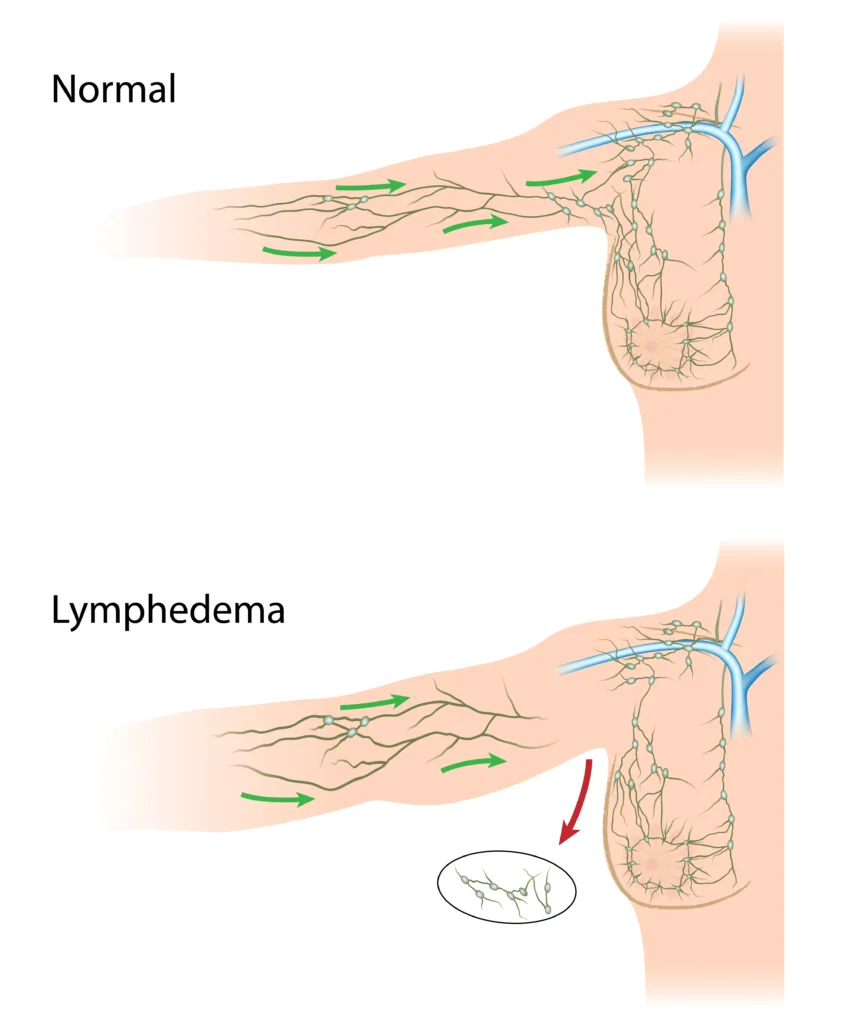
Your lymphatic system works to process lymph, a waste fluid created by your cells. When the system works properly, it circulates lymph throughout your body to your lymph nodes.
But when something disrupts your lymphatic system, waste fluid can build up in your lymphatic vessels, causing swelling. The swelling will be slight initially, but if left untreated, it can become severe and profoundly impact your quality of life.
Lymphedema is often associated with breast cancer survivors because of the treatment techniques, particularly surgery and radiation. These treatments can damage (or, in the case of surgery, remove) the lymph nodes, causing the lymphatic fluid to accumulate in the surrounding tissues, particularly in the arms, chest, or upper body.
However, while cancer survivors do have a higher risk, developing lymphedema is not a guarantee. You can take steps to reduce the chances of developing the condition, and even if you do, early treatment can minimize its impact.
Two Patient Stories; Two Very Different Outcomes
To illustrate this point, we want to share two patient stories (their names have been changed). One patient sought early treatment for lymphedema. The other didn’t. Here’s how their experiences differed.

Ignoring the Signs: Lisa’s Story
Lisa felt hopeful when she finished her breast cancer treatment. She knew lymphedema was a potential side effect of her surgery and radiation, but like many survivors, she was eager to get back to normal.
A few months after treatment, Lisa noticed some small changes. Her favorite wristwatch felt tighter than usual, and the sleeves of a tight-fitting sweater seemed overly snug. She brushed both signs off as weight gain.
But over time, the swelling worsened. Furthermore, her arm felt heavy, achy, and stiff, making it difficult to cook and work on her computer. It wasn’t until she looked in the mirror one day and noticed that one arm was significantly larger than the other that she sought help.
Unfortunately, Lisa’s lymphedema had already progressed to the moderate-to-advanced stage. While our team was still able to help ease her symptoms, she required much more intensive treatment, including:
- Regular lymphatic therapy sessions
- Ongoing use of compression garments to help reduce swelling
- Additional self-management techniques, such as breathing exercises
- Gentle aerobic exercise (which was often challenging for Lisa to perform due to her mobility restrictions)
While we were able to help alleviate Lisa’s symptoms, we couldn’t eliminate them completely. Lisa now has to put in significant effort to manage her condition–something she may have been able to avoid if she had visited us earlier, as Renee did.
Taking Early Action: Renee’s Story
In many ways, Renee’s circumstances were very similar to Lisa’s. She also faced breast cancer and underwent surgery and radiation. However, during her follow-up care, her oncology team emphasized the importance of monitoring for lymphedema, giving her a list of small signs to watch out for:
- A sense of heaviness or tightness in the arm or chest
- Difficulty fitting into rings or watches
- Indentations in the skin after wearing jewelry
- Swelling that comes and goes
Renee kept these symptoms in the back of her mind. When she noticed an indentation on her finger after taking off her wedding ring, she took action. Renee immediately scheduled an appointment with the team at Rising Sun Physical Therapy, where we conducted a comprehensive assessment and confirmed that Renee was showing early signs of lymphedema.
We began her treatment immediately, focusing on lymphatic therapy and a daily walking regimen to help her stay active and encourage lymphatic flow. These early interventions halted the progression of her lymphedema, and she never developed the more severe symptoms that Lisa did.
Sources: https://www.ncbi.nlm.nih.gov/books/NBK537239/, https://www.sciencedirect.com/science/article/abs/pii/S0003999321013587
Take Control of Your Health Today
If you’ve recently undergone treatment for breast cancer, we strongly recommend you make an appointment at our clinic–even if you aren’t showing symptoms! We can perform an early assessment, let you know what to watch out for, and discuss ways to minimize your risk.
A proactive approach is best when it comes to lymphedema. Visit Rising Sun Physical Therapy online or email us at support@risingsunphysicaltherapy.com to get started.
Lipedema vs. Lymphedema: What’s the Difference?
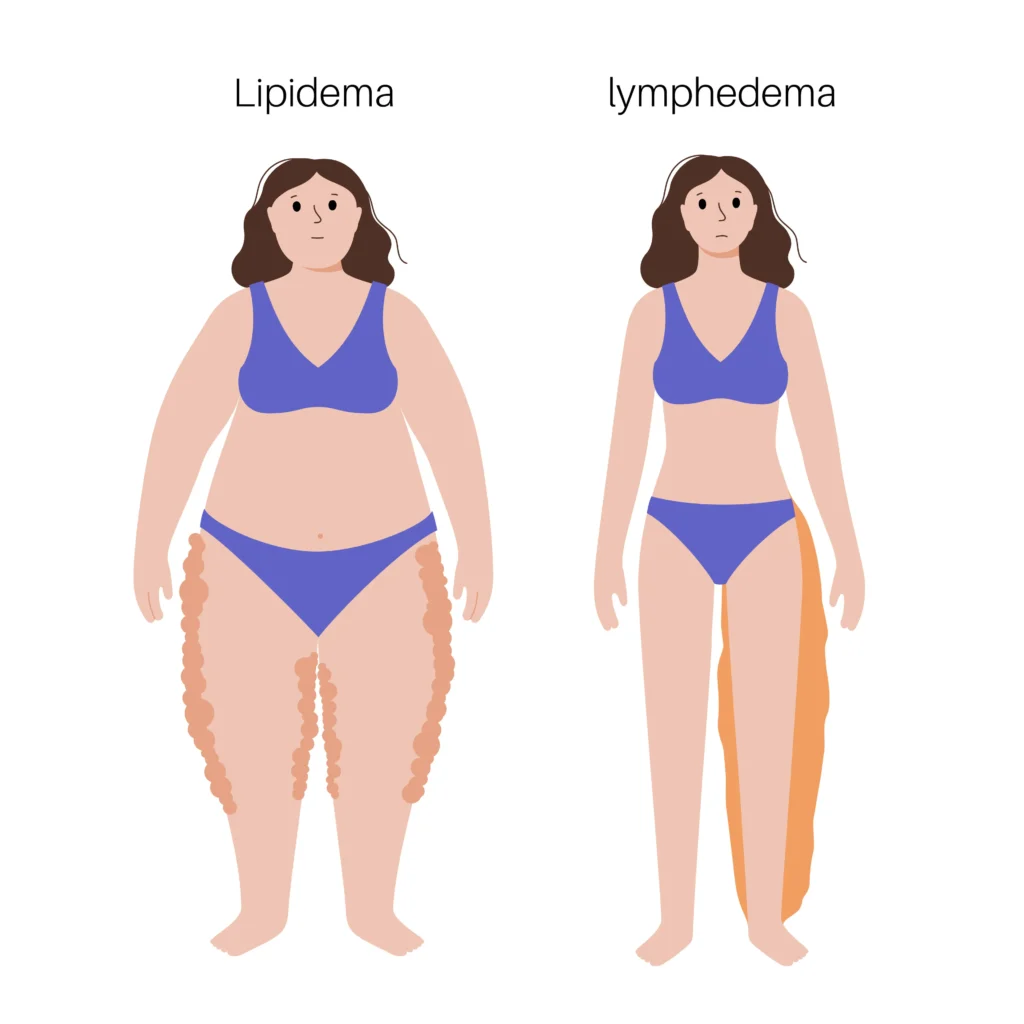
It’s easy for people to confuse lipedema and lymphedema. They have similar names, and both cause swelling and discomfort in the limbs. However, these are two different conditions with different causes and treatment approaches.
What Is Lymphedema?
As we explored in the main article, lymphedema results from a disruption in the lymphatic system that causes fluid buildup in a particular area, usually (although not always) on one side of the body. It can affect the legs, arms, trunk, head, neck, or genitalia.
There are two types of lymphedema:
Primary Lymphedema
- A rare, inherited condition caused by abnormal lymphatic system development
Secondary Lymphedema
- This is much more common and occurs when an external factor damages the lymphatic system, such as cancer treatment, surgery, radiation, infection, or injury. Although we associate it with breast cancer, it can develop after any type of cancer treatment, and it can affect both men and women.
Lymphedema develops gradually. Without treatment, the swelling can worsen and impair your mobility. Interventions include lymphatic therapy, compression garments, and tailored self-management strategies.
What Is Lipedema?
Lipedema is a chronic, often painful condition where abnormal fat deposits build up under the skin, typically in the legs, buttocks, and sometimes arms. It usually affects both sides of the body and can cause bruising, tenderness, and a heavy feeling in the limbs.
Lipedema is more likely to affect women, and it often develops during hormonal shifts like puberty or pregnancy. There’s no cure, but a comprehensive management program, including compression garments, good nutrition, and exercise, can help manage your symptoms.
Not Sure Which One You Have?
At Rising Sun Physical Therapy, we help people manage lipedema and lymphedema with compassionate, whole-person care. Our team can assess your symptoms, help you understand your condition, and provide you with the tools you need to find relief.
Visit our website to schedule your appointment today.

Pineapple Green Smoothie
- 1/2 cup unsweetened almond milk
- 1/3 cup nonfat plain Greek yogurt
- 1 cup baby spinach
- 1 cup frozen banana slices
- 1/2 cup frozen pineapple chunks
- 1 tablespoon chia seeds
- 1-2 teaspoons pure maple syrup or honey (optional)
Add almond milk and yogurt to a blender, then add spinach, banana, pineapple, chia seeds, and sweetener (if using); blend until smooth.

Staff Highlight
A Personal Perspective on Early Detection
By Bettina Neumann, PT, CST, LLCC
Over 20 years ago, I was diagnosed with cancer. Like many, my first priority was removing the cancer—which was essential. But soon after, I developed swelling in my breast. While it wasn’t seen as urgent by some, I trusted my instincts and insisted on treatment.
At that time, therapists specializing in lymphedema were few. I was fortunate to find care early. Today, I am both cancer-free and lymphedema-free.
As a physical therapist and former patient, I’ve seen firsthand that early detection makes all the difference. Lymphedema is treatable, and the sooner it’s addressed, the better the results.
If you notice swelling or changes, speak up. Advocate for yourself. You deserve timely, effective care. If you have questions or concerns, make an appointment with us. We’re here to support you early and effectively.

Movement and Lymphedema Care
A Dance Back to Yourself
If you’re living with lymphedema or recovering after cancer treatment, you know how it can affect not only your body, but how you feel about moving at all. Things can feel different, unfamiliar, or harder than before.
Aurras Waves is a dynamic movement meditation inspired by 5Rhythms. It offers a way to reconnect—shifting, releasing tension, and discovering more ease and curiosity in movement. It’s not about performing or pushing past limits. Instead, it’s an invitation to explore at your own pace, in a way that feels supportive.
Aurras Waves can complement your physical therapy, compression, and other care by helping you feel more at home in your body and more confident in your ability to adapt. Over time, this practice can nurture a renewed sense of trust and moments of freedom in daily life.
These sessions are guided by Bettina Neumann, PT, CST, LLCC, Certified 5Rhythms Teacher, and Somatic Movement Educator. With decades of experience supporting individuals through injury, illness, and recovery, Bettina creates a space where you can feel safe, seen, and encouraged to move in ways that honor your unique body and experience.
Join us for July classes and experience how movement can become part of your healing and self-care. We will pause in August and return in September.