Treating Frozen Shoulder with Patience, Precision, and Care
It starts quietly: A little stiffness in your shoulder joint when you reach into the back seat. A sharp catch of pain when you put on a jacket. But then the pain worsens, and one day, you realize you can’t even lift your arm above your head.
These symptoms show the classic progression of frozen shoulder, a condition that can be both confusing and frustrating. The pain might start in your shoulder, but frozen shoulder affects more than a joint. When left untreated, it can impact your daily rhythm, your confidence, and your sense of ease in your body.
Understanding Frozen Shoulder
Frozen shoulder’s name offers some insight into what the condition is like, although it doesn’t capture the full experience. It occurs when connective tissue around the shoulder joint becomes restricted and inflamed, a process that causes three distinct stages:
- The freezing stage is marked by increasing pain, especially at night. Shoulder movement becomes more limited.
- During the frozen stage, pain often improves, but joint stiffness increases, making reaching overhead or behind your back feel almost impossible.
- In the thawing stage, movement slowly begins to return.
Each stage can last months, and some people experience symptoms for over a year. But as Melinda (not her real name) discovered, early care can significantly reduce that timeline.
How Whole-Person Care Helped Melinda Heal Her Frozen Shoulder
Melinda is in her 50s and loves gardening and yoga. A year ago, she noticed some tightness in her right shoulder. She assumed it would pass.
It didn’t.
Within a few months, Melinda couldn’t brush her hair or clasp her bra. She stopped going to yoga, and she couldn’t remember the last time she had a full night’s sleep. She was told that frozen shoulder was common in women her age and that her symptoms would improve eventually.
But Melinda didn’t want to wait it out in pain, so she made an appointment with Rising Sun Physical Therapy. Because we understand that frozen shoulder is influenced by several factors, including inflammation, nervous system sensitivity, hormonal shifts, and movement patterns, we knew that treatment would need to be multifactorial as well.
A Whole-Person Plan
We started with an in-depth conversation. We wanted to know more about Melinda’s symptoms, understand which activities she wanted to get back to, and learn how other factors, like stress, might be contributing. From there, we were able to create a truly personalized plan of care.
Here’s what we did:
1. Calmed Inflammation and Pain
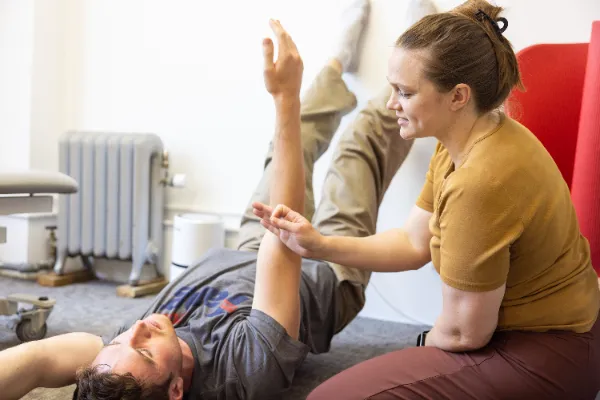
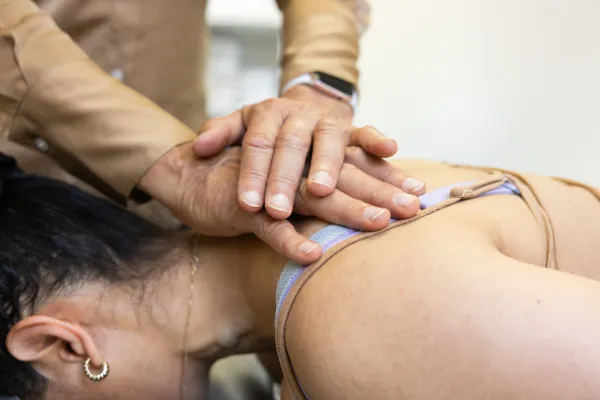
Melinda came to us while she was still in the freezing stage, and so we didn’t want to push too aggressively, as that can worsen symptoms. Instead, we focused on hands-on manual therapy techniques, such as joint mobilizations and soft-tissue work, to improve movement and reduce muscle guarding. Information about proper activity pacing also helped her feel more confident.
2. Gradually Restored Movement
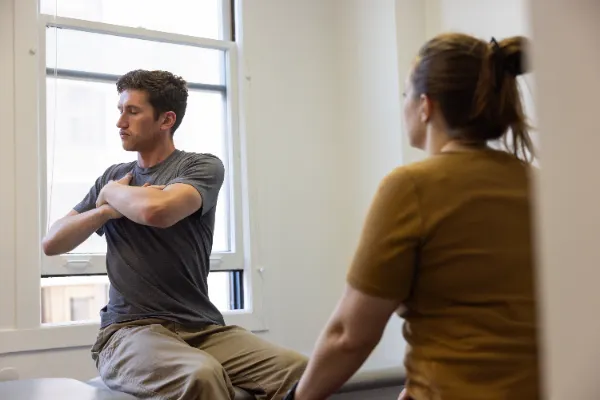
As her pain stabilized, her program progressed to include therapeutic exercises, such as supported stretching and controlled rotator cuff strengthening, which help stabilize the shoulder muscles. We also helped her become more aware of her posture, as that can help reduce symptoms.
3. Supported Her Whole Body
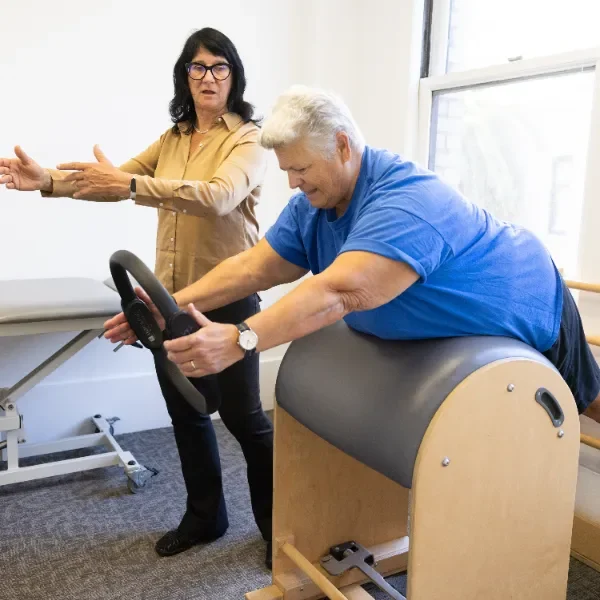
What really made the difference for Melinda was that her care extended beyond the shoulder. She participated in Somatic Pilates, which focuses on breath, alignment, and gentle core support to reduce compensatory tension in her neck and upper back. We also provided tips on sleep positioning to reduce her nighttime symptoms and walked her through several stress-reduction strategies, as persistent stress can heighten pain sensitivity.
Melinda’s Turning Point
After working with us for about four months, Melinda noticed that she could reach overhead without bracing. This was the first sign she was feeling better. Soon, she started sleeping through the night, and by summertime, she was back in yoga (just with a few modifications for key poses).
It’s true that a frozen shoulder can resolve on its own over time. But as Melinda discovered, guided, compassionate care can shorten that timeline and reduce unnecessary suffering.
Exercise of the Month
Threading the Needle
(Shoulders, Upper Back, Spine Rotation)
Start on your hands and knees in a tabletop position. Slide one arm underneath your body, palm facing up, allowing your shoulder and the side of your head to gently rest on the floor. Feel the stretch through your upper back and shoulder. Hold briefly, then return to the starting position and switch sides. 3 Sets, 30-Second Hold (each side).
How Kinesio Taping Fits Into Whole-Person Care
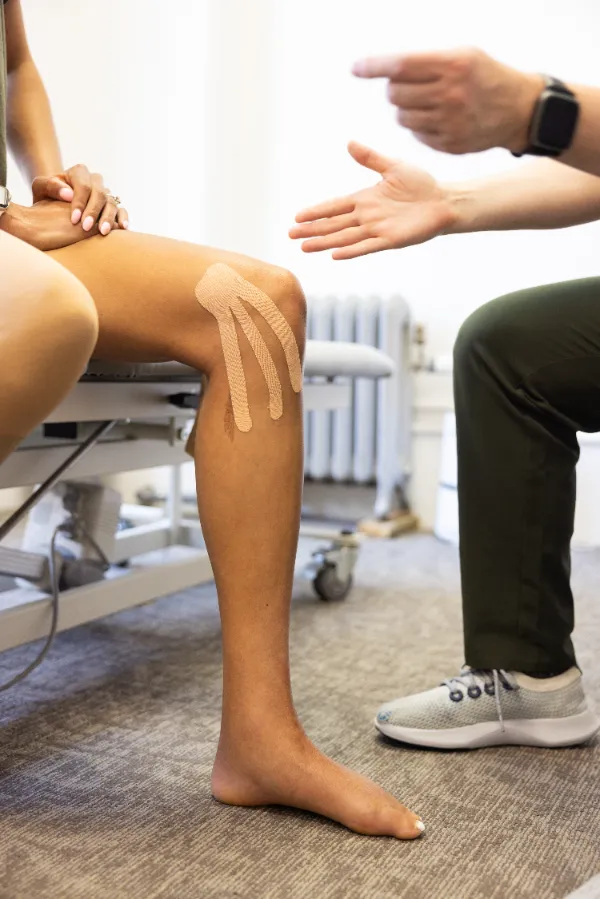
If you watch live sports, you may have seen Kinesio tape before: bright strips of tape across an athlete’s shoulder or knee as they head onto the field. But athletes aren’t the only ones who can benefit. In fact, it can help anyone dealing with pain, swelling, muscle strain, or joint irritation.
Kinesio tape is a stretchy, breathable cotton tape that mimics the elasticity of human skin, allowing for a full range of motion. When applied correctly, the tape lightly lifts the outer layer of skin, creating space between the skin and underlying tissues. This helps to improve circulation, support lymphatic drainage, and decrease pressure on pain-sensitive structures.
At Rising Sun Physical Therapy, we use Kinesio tape as one piece of a thoughtful, whole-person plan. It supports healing while allowing you to move, work, and live with more ease.
Eight Ways Kinesio Tape Can Enhance Your Physical Therapy Program
Ready to Experience the Benefits of Kinesio Tape for Yourself?
If you’re managing pain or recovering from injury, don’t overlook the potential of Kinesio tape. Our team can help you understand how it might fit into your overall treatment plan.
Schedule an appointment at Rising Sun Physical Therapy today to get started.


Why High-Functioning Adults Often Stop Listening to Their Bodies
Many high-functioning adults notice stress in the body, but awareness alone does not always lead to change. When tension, fatigue, and holding are repeatedly overridden, the body can gradually lose range without us fully noticing. Our newest blog post explores this pattern — and why restoring movement is one of the ways the nervous system begins to recover adaptability, helping support resilience, function, and longevity over time.
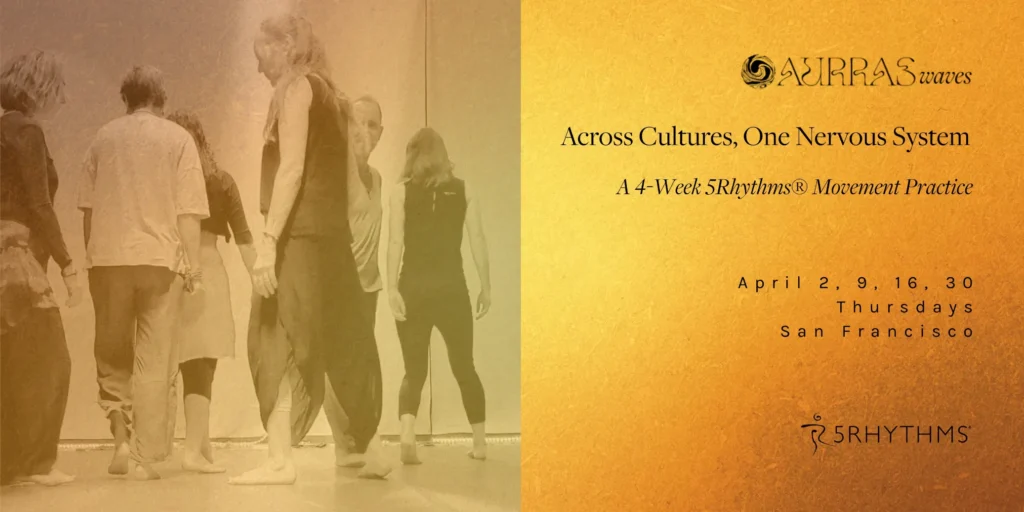
Across Cultures, One Nervous System — 5Rhythms® Movement Practice
If you want to bring more range in movement into your life, Across Cultures, One Nervous System offers a place to begin. Over four Thursday evenings, breath leads movement through rhythm, inviting the body out of repetition and back into range, response, and aliveness. No dance experience needed.
Happy News from the Rising Sun Team

There are joyful changes and wonderful milestones unfolding at Rising Sun Physical Therapy. Kelsey is now on maternity leave, and we are sending her so much love as she enters this precious new chapter with her growing family. We wish her a beautiful, nourishing baby season and look forward to welcoming her back when the time is right.
We are also thrilled to celebrate Simone, who has completed a full year of dedicated study and has now graduated from the Polestar Pilates teacher training program. What a special accomplishment. We are so proud of her dedication, her care, and the knowledge she continues to bring to her work and to our community.
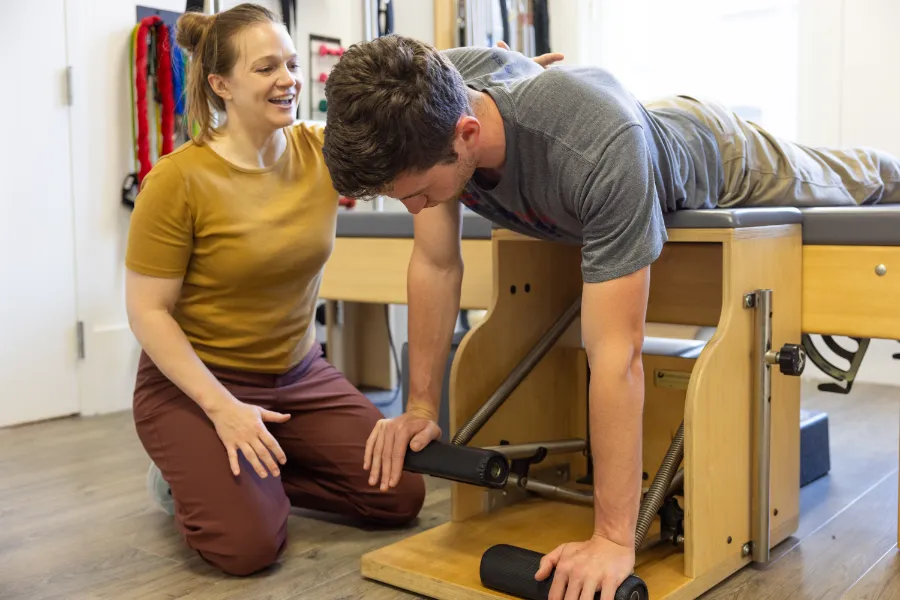


During Kelsey’s maternity leave, you will be seeing Hamile in the office, helping with the day-to-day patient experience, while Cindy works behind the scenes to help everything run smoothly. Please join us in welcoming Hamile and Cindy, congratulating Simone, and wishing Kelsey a joyful maternity leave.

Healthy Recipe: Ginger Lemon Chicken Soup
This simple, anti-inflammatory soup is packed with ginger and lemon to help calm inflammation — a perfect complement to your recovery.
Ingredients (Serves 4)
- 1 lb boneless chicken breast or thighs
- 6 cups low-sodium chicken broth
- 1 tablespoon fresh ginger, grated
- 3 garlic cloves, minced
- Juice of 1 lemon
- 2 carrots, sliced
- 2 stalks celery, chopped
- Salt and pepper to taste
- Fresh parsley to garnish
Instructions
In a large pot, bring broth to a boil. Add chicken, ginger, garlic, carrots, and celery. Reduce heat and simmer for 20 minutes, or until chicken is cooked through. Remove chicken, shred it, and return to the pot. Stir in lemon juice, season with salt and pepper, and garnish with parsley. Serve warm.
We’re Here If Your Shoulder Feels Stuck
At Rising Sun Physical Therapy, care centers on you: your goals, your concerns, your pace. No matter how frozen shoulder might be impacting your life, our team will help you build a personalized, whole-body plan so you can move forward with clarity and confidence.
Request an appointment today. Let’s help your shoulder — and your life — feel open again.
Sources: https://journals.sagepub.com/doi/abs/10.1177/17585732251338652, https://www.tandfonline.com/doi/abs/10.1080/21679169.2020.1827029, https://www.mdpi.com/1648-9144/58/5/620