Why Sciatica is So Much More Than Leg Pain
“Sciatica” is one of those words that gets tossed around a lot without people fully understanding what it means. Most commonly, people use it as a catch-all term for lower-body pain, but it’s actually a specific symptom that can have a big impact on your quality of life.
There is good news, though: sciatica is usually treatable with physical therapy. At Rising Sun Physical Therapy, we believe understanding your pain is an essential part of care, so let’s take a closer look at what sciatica is, why it happens, and how we can help.
The Bottom Line: Sciatica is a Symptom, Not a Condition
One of the biggest misconceptions about sciatica is that it is a diagnosis. In reality, sciatica is a symptom caused by irritation or compression of the sciatic nerve, which can result from a variety of conditions.
Your sciatic nerve begins in your lower back, travels through your buttocks, and continues down each leg to your foot. Like all nerves, it sends messages that control movement and sensation. But when something irritates the nerve, particularly the nerve root in the lower back, those messages become disrupted, and you’ll start to experience pain, numbness, or tingling all along the path of the nerve.
Those sensations are what the term “sciatica” actually refers to.
So What Causes Sciatica, Anyway?
Several conditions can trigger sciatica, including:
- A herniated or bulging disc pressing on a nerve root
- Arthritis that narrows the spaces where nerves exit the spine
- Tight muscles, such as the piriformis muscle, located deep in each buttock
- Spinal stenosis, which is a narrowing of the spinal canal
How Sciatica Affects Day-to-Day Life
As you can see, sciatica is about much more than lower-body pain. Because the sciatic nerve controls muscles and sensation throughout the leg, symptoms can affect many everyday activities.
For example, you might notice:
- Sitting through a movie becomes uncomfortable after only a few minutes.
- Standing in the kitchen to prepare dinner causes pain to spread into the leg.
- Walking the dog feels easier some days than others.
- Sleeping is harder to come by, since it’s difficult to get into a comfortable position
- Picking up your child or grandchild suddenly feels intimidating.
Often, people with sciatica avoid their favorite activities due to discomfort. But as they become more sedentary, they risk worsening their symptoms. A better approach to managing sciatica is working with the team at Rising Sun Physical Therapy to address your symptoms at their source.
Looking Beyond Your Symptoms
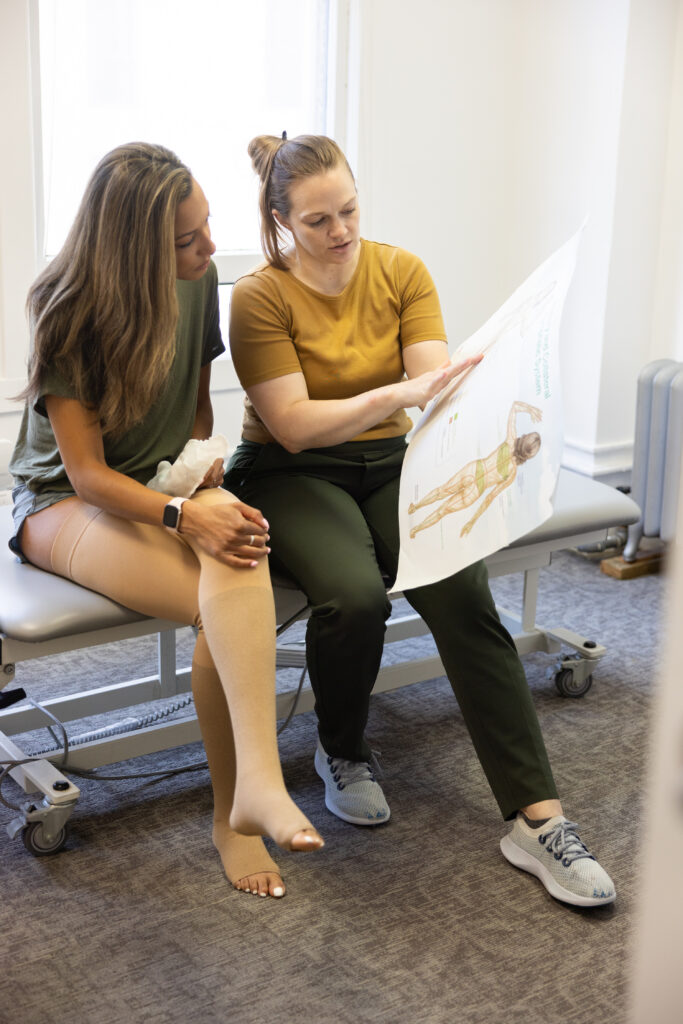
We recognize that every person brings a different story into the clinic. Your daily routines, stress levels, movement habits, and overall health all influence your recovery. That’s why we’ll always start by listening and evaluating. We want to know:
- What exactly is irritating your sciatic nerve
- Which day-to-day movements relieve your symptoms and which increase them
- How strength, mobility, balance, and posture might be contributing to both symptoms and the underlying cause
- What matters most to you, whether that is gardening, traveling, exercising, or simply sleeping through the night
From there, we’ll create a treatment plan that’s tailored to your needs. Most importantly, we’ll help resolve the underlying condition causing your sciatica, rather than merely treating the symptoms.
Exercise of the Month
Piriformis Stretch
(Glutes, Sciatic Nerve)
Start by sitting up straight with your knees bent and feet flat. Bend your leg and place your ankle across the top of your other knee. Rotate your trunk toward your bent knee and gently pull your knee toward your chest until you feel a stretch in your hip. Hold for 30 seconds.
2 Sets, 1 Rep.
(Materials needed: chair)
Some of the Ways We Address Sciatica

- Nerve gliding exercises that help improve how the nerve moves through surrounding tissues
- Movement retraining to reduce unnecessary stress on the sciatic nerve
- Targeted stretches to help reduce acute pain and muscle spasms
- Stress management and breathing techniques to help influence how your nervous system responds to pain signals
- Core strengthening exercises to build a protective girdle for your spine, which can be particularly useful if a herniated disc is at the root of your sciatica
- Education about body mechanics, lifting strategies, and activity modification
You Have Hope Beyond Sciatica
Sciatica can make everyday life feel unpredictable, but it doesn’t have to define your day-to-day living. With a thoughtful evaluation, personalized care, and a whole-person approach, many of our patients regain comfort and return to the activities that matter most to them.
If sciatica has been interfering with your life, the Rising Sun Physical Therapy team is here to learn more about your unique experience and develop a plan that supports your health from every angle. Together, we can help you move with greater ease, build lasting confidence, and get back to living life on your terms.
Your Body Wants to Move
Instead of worrying about sciatica pain day in and day out, contact Rising Sun Physical Therapy today and we will guide you through a personalized approach that can help you move more freely, feel better, and stay active for years to come.
Does Your Back Feel Stiff In the Morning?
Here’s What Your Body Might Be Trying to Tell You
Your alarm’s gone off, and you swing your legs out of bed–only to feel like your back has hit the snooze button. Sound familiar? Morning spinal stiffness is a fairly common occurrence, particularly as we get older. However, that doesn’t mean you should just ignore it. Often, it’s your body’s way of sharing an important message about how your spine, muscles, or joints are functioning.
Why Does Morning Back Stiffness Happen?
During sleep, your entire body goes into rest mode. That means your spine isn’t moving as much, your muscles cool down, and fluid shifts inside your spinal disc. As you wake up and start moving around, things loosen up, and the stiffness fades.
Sometimes, however, persistent stiffness can point to an underlying issue, such as:
- Tight muscles or limited spinal mobility
- Arthritis in the spine
- Weak core muscles that provide less support for the spine
- A mattress or sleeping position that places extra stress on your back
How Can I Tell If My Stiff Back Is Something Serious?
Pay attention to how long the stiffness lasts. If the stiffness fades within a few minutes, it likely just reflects normal changes after sleeping.
However, if it happens every morning and persists for around half an hour or longer, it’s worth visiting Rising Sun Physical Therapy to find out what’s going on. In some cases, you might be able to resolve it by becoming more physically active during the day, which helps keep your spine healthy. But if there’s an underlying condition (like arthritis), we can help with that as well.
Could Movement Be The Medicine?
Many people complete physical therapy and wonder: Now what?
Aurras Waves offers a weekly space to continue the journey through movement, music, and body awareness. This 5Rhythms® practice supports stress reduction, nervous system regulation, mobility, adaptability, and a deeper connection with yourself.
No dance experience needed. Just bring your body.
Thursdays • 7:00–8:30 PM
Joe Goode Annex • San Francisco
Move. Listen. Heal.


I’m Bettina-Kira Neumann—physical therapist, somatic practitioner, and 5Rhythms® teacher. I created Aurras as a way to extend the healing work beyond the clinic and into real life.
Healthy Recipe: Lemon Basil Chicken with Sweet Corn and Zucchini Salad

Ingredients
- 1 lb boneless, skinless chicken breasts (pounded to even thickness)
- 1 tbsp extra-virgin olive oil
- 1 tsp dried oregano, salt, and freshly cracked black pepper
- 2 ears fresh sweet corn, kernels sliced off the cob
- 1 medium zucchini, diced
- 1 cup cherry tomatoes, halved
- ¼ cup fresh basil leaves, thinly sliced (chiffonade)
- 2 tbsp extra-virgin olive oil
- Juice of 1 large lemon
Instructions
- Season the chicken: Rub the chicken breasts with olive oil, dried oregano, salt, and pepper.
- Grill the chicken: Heat a grill or large skillet over medium-high heat. Cook the chicken for 5-6 minutes per side, or until the internal temperature reaches 165°F. Remove from heat and let it rest while you make the salad.
- Sauté the vegetables: In a separate skillet, heat the remaining olive oil over medium-high heat. Add the corn kernels and diced zucchini. Sauté for 3-4 minutes just until tender and slightly charred. Remove from heat.
- Mix the salad: In a serving bowl, combine the warm corn and zucchini with the halved cherry tomatoes and fresh basil. Squeeze the lemon juice over the top, season with salt and pepper, and toss well. Fold in cheese if using.
You Deserve to Wake Up in Comfort
Don’t let back stiffness become part of your morning routine. Schedule an appointment at Rising Sun Physical Therapy to discover what your body is trying to tell you!
Sources
https://www.ncbi.nlm.nih.gov/books/NBK507908